
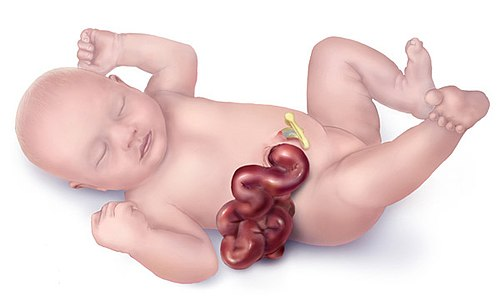
Gastroshiza is a term people use for a medical condition known as Gastroschisis. It is a birth defect where a baby is born with a small opening in the belly area.
Because of this opening, the intestines grow outside the body instead of staying inside. This happens during early pregnancy when the baby is still developing.
It may look serious at first, but today many babies recover well with proper medical care.
How Gastroshiza Happens
This condition begins in the early weeks of pregnancy. The baby’s abdominal wall does not close fully. This leaves a small hole near the belly button.
Through this hole, the intestines move outside and float in the fluid that surrounds the baby in the womb. This fluid is called the Amniotic Fluid.
Over time, this can cause irritation or swelling in the intestines. That is why early treatment is important after birth.
Key Signs of Gastroshiza
Doctors can easily identify this condition because it has clear signs.
Here are the main features:
- A small opening near the belly button
- Intestines outside the body
- No protective covering over the organs
- Often seen before birth on scans
The absence of a protective layer makes this condition different from similar problems.
Symptoms During Pregnancy and After Birth
During Pregnancy
Most mothers do not feel any unusual symptoms. The baby may seem normal from the outside.
Doctors usually detect the condition during routine scans. They may notice unusual shapes or organs outside the baby’s body.
After Birth
The condition becomes clearly visible at birth.
Common signs include:
- Intestines outside the abdomen
- Difficulty feeding
- Risk of infection
Doctors act quickly to protect the baby and start treatment.
How Doctors Diagnose Gastroshiza
Early diagnosis plays a very important role. It helps doctors prepare in advance.
Common Tests
- Ultrasound to see organs outside the body
- Blood test to check protein levels
- In some cases, detailed imaging for clarity
Most cases are found in the middle stage of pregnancy. This gives enough time to plan safe delivery and care.
Gastroshiza vs Omphalocele
People often confuse this condition with Omphalocele.
Here is a simple difference:
- Gastroshiza: organs are fully exposed
- Omphalocele: organs are covered with a thin sac
This small difference changes how doctors treat the baby.
Causes and Risk Factors
The exact cause of Gastroshiza is still not fully known. It is believed to happen due to a mix of factors.
Some possible risks include:
- Young age during pregnancy
- Smoking or alcohol use
- Poor nutrition
- Environmental exposure
It is important to understand that it can happen even if none of these factors are present.
Treatment After Birth
Treatment usually starts right after the baby is born. Surgery is the main solution.
Immediate Care
Doctors first protect the exposed organs. They keep them clean and safe to avoid infection.
Surgical Options
- Primary repair
The organs are placed back inside and the opening is closed - Staged repair
Used when the intestines are swollen
A soft pouch helps move them back slowly
Both methods aim to safely return organs to their proper place.
Possible Health Challenges
Some babies may face health issues even after surgery.
Common problems include:
- Feeding difficulties
- Slow digestion
- Risk of infection
- Early birth complications
Doctors monitor the baby closely to manage these challenges.
Recovery and Long Term Life
The good news is that many babies recover well. With modern care, survival rates are high.
Recovery may take some time, especially for feeding and digestion.
As the child grows:
- Eating improves slowly
- Growth becomes normal
- Regular checkups ensure health
Many children go on to live healthy and active lives.
How Common Is Gastroshiza
This condition is rare but still seen around the world.
It affects about 1 in every 2,000 to 3,000 births. In recent years, doctors have noticed a slight increase in cases.
Research is still ongoing to understand why this is happening.
Can Gastroshiza Be Prevented
There is no sure way to prevent it. However, healthy habits can reduce risks.
Helpful steps include:
- Regular pregnancy checkups
- Avoid smoking and alcohol
- Eat healthy food
- Follow medical advice
These steps support the baby’s overall development.
Importance of Early Detection
Early detection makes a big difference in outcomes.
It allows doctors to:
- Plan delivery in a hospital with specialists
- Prepare surgical teams
- Reduce complications after birth
This improves both safety and recovery chances.
Emotional Support for Families
This condition can be stressful for parents. Seeing a newborn with this issue can be scary.
But support is available:
- Doctors guide parents step by step
- Nurses help with care and feeding
- Support groups offer emotional help
With the right care and information, families feel more confident.
Final Thoughts
Gastroshiza is a serious condition, but it is also treatable. It starts during early pregnancy and leads to organs developing outside the body.
With early diagnosis, proper planning, and surgery, most babies recover well.
Understanding the condition help reduce fear and prepares families for the journey ahead.
 Sky Bloom IT
  IQnewswire