
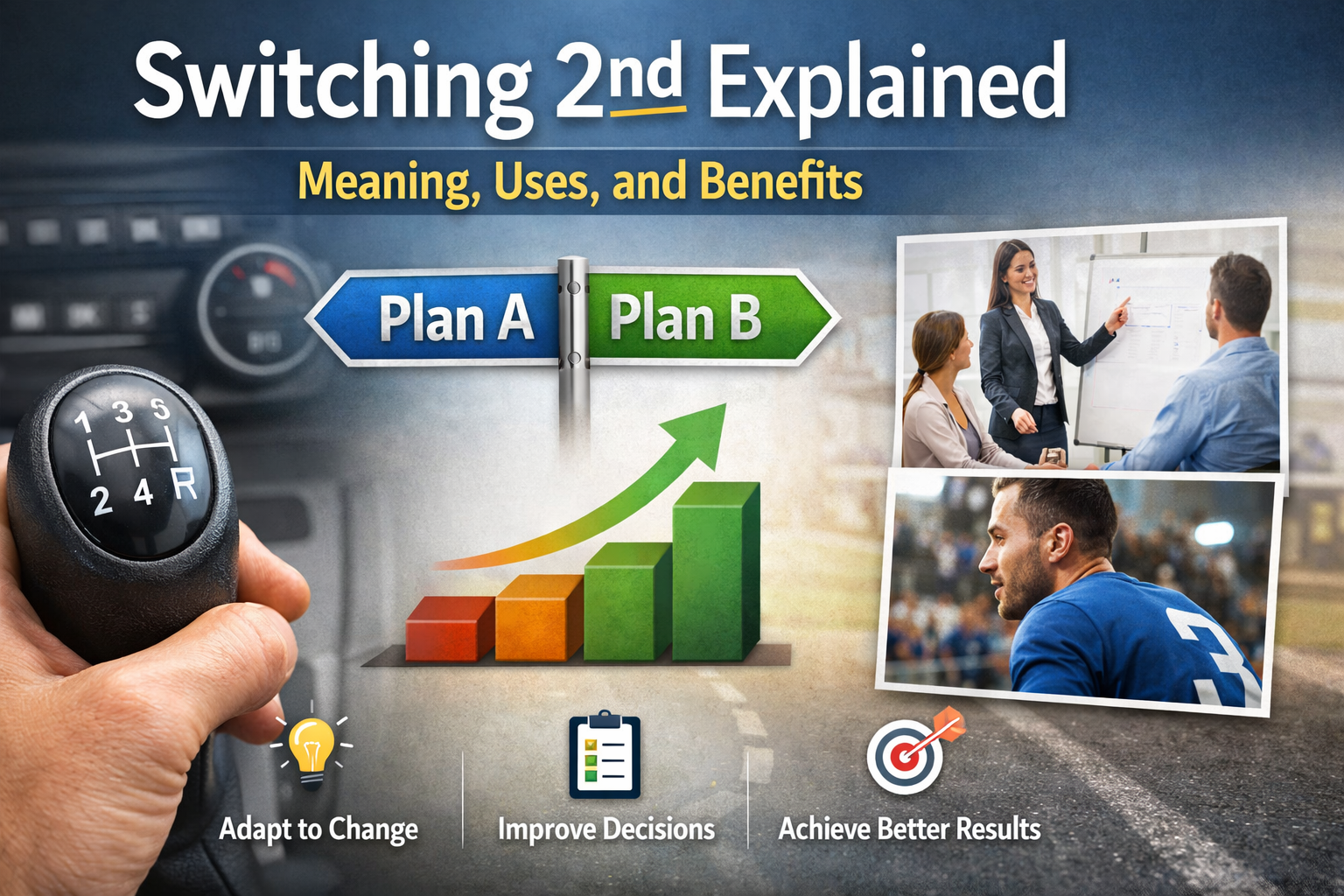
Switching 2nd means moving from your first plan, role, or method to a better second option when the first is no longer effective. It reflects smart decision-making, adaptability, and timing. People use this approach in daily life, work, business, and technology to improve results, reduce stress, and continue moving forward.
Introduction
Life rarely follows a straight path. You start with a plan, but sometimes it does not work the way you expected. In such moments, you face a choice. You can stay stuck, or you can adjust.
This is where the idea of switching 2nd becomes important.
It is not a complicated concept. It simply means you change your approach at the right time to get better results. Yet, this simple idea can shape your success in powerful ways.
People who understand when and how to switch often move ahead faster. They avoid frustration and find better solutions.
What Does Switching 2nd Mean?
Switching 2nd refers to shifting from your first option to a second one when the first stops working well.
This idea has both a practical and a broader meaning.
Simple explanation
- The first step helps you begin
- The second step helps you improve
Two main meanings
| Type | Meaning | Example |
|---|---|---|
| Literal meaning | Moving from first gear to second gear | Driving a car |
| General meaning | Changing plan or method | Trying a new strategy |
In both cases, the goal stays the same.
Keep moving forward in a better way.
The Core Idea Behind Switching 2nd
The main idea is simple. Do not stay stuck when change can help you improve.
Switching 2nd is based on two important skills:
- Awareness
You notice when something is not working - Adaptability
You take action and choose a better option
Together, these skills help you make smarter decisions.
Why Switching 2nd Matters Today
The world changes quickly. New tools, new ideas, and new challenges appear every day. If you stay fixed in one way, you may fall behind.
Switching 2nd helps you:
- Stay flexible
- Solve problems faster
- Make better use of time
- Reduce stress
- Improve results
It is not about quitting. It is about choosing a better path.
Real-Life Situations Where Switching 2nd Helps
1. In Daily Life
You use this concept more often than you think.
Examples include:
- Changing your study method when you do not understand a subject
- Adjusting your routine to improve health
- Trying a different approach to manage time
Each small change helps you grow.
2. In Driving
Driving shows this idea clearly.
- First gear helps you start
- Second gear helps you move smoothly
If you stay in first gear for too long, the engine struggles. The same happens in life when you refuse to adjust.
3. In Work and Career
In your job or career, switching 2nd can mean:
- Learning a new skill
- Changing your work method
- Moving to a better opportunity
People who adapt in their careers often grow faster and feel more satisfied.
4. In Business and Strategy
Businesses often need to change direction.
Examples include:
- Updating marketing strategies
- Shifting to online platforms
- Improving products or services
Companies that adjust at the right time stay competitive and grow stronger.
5. In Sports
Athletes and teams constantly adjust their strategies.
- A player changes position
- A coach updates the game plan
- A team adapts to the opponent
These changes often lead to better performance.
6. In Technology
Modern systems rely on backup plans.
| Area | Example |
|---|---|
| Internet | Switching from WiFi to mobile data |
| Software | Using backup processes |
| Servers | Switching to backup systems |
This ensures smooth performance even when problems occur.
Psychological Side of Switching 2nd
Switching 2nd reflects mental flexibility.
People with this mindset can:
- Accept change without fear
- Learn from mistakes
- Stay calm under pressure
- Make clear decisions
This ability is often called adaptive thinking.
It helps you stay strong even when things go wrong.
Signs That You Should Switch
Knowing when to switch is very important.
Common signs
- Your effort is high but results are low
- You feel tired or frustrated
- Progress becomes very slow
- The situation has changed
- Your current method no longer works
These signs show that it may be time to try something new.
How to Switch 2nd the Right Way
Switching should be thoughtful and planned.
Step by step method
- Understand the issue
Identify what is not working - Explore better options
Look for new ideas or solutions - Choose carefully
Select the best second option - Make a smooth change
Avoid sudden or emotional decisions - Check the results
See if the new approach works
This process helps you move forward with confidence.
Common Mistakes to Avoid
Many people struggle because they switch at the wrong time.
Avoid these mistakes
- Switching too early without trying enough
- Waiting too long to change
- Acting on emotions instead of thinking clearly
- Not planning the transition
- Ignoring better options
Balance and timing make all the difference.
Read More: Nova Scola: A Complete Guide to a New Way of Learning
Benefits of Learning This Skill
Switching 2nd is not just useful. It is essential.
Key benefits
- Better decision-making
- Faster growth
- Less stress
- More confidence
- Improved problem-solving
It helps you stay focused and avoid wasting time on what does not work.
Switching 2nd vs Staying Stuck
| Factor | Staying the Same | Switching 2nd |
|---|---|---|
| Progress | Slow | Faster |
| Flexibility | Low | High |
| Results | Limited | Improved |
| Stress | Higher | Lower |
This comparison shows why change can be powerful.
Real-Life Examples
- A student changes study habits and improves grades
- A worker learns new skills and gets promoted
- A business changes strategy and grows
- A person changes routine and improves health
Each example shows how switching leads to better outcomes.
Deeper Meaning: A Life Skill
Switching 2nd is more than a simple idea. Its a life skill.
It teaches you:
- When to continue
- When to change
- How to make better choices
It helps you stay strong in difficult situations.
Final Thoughts
Switching 2nd is a simple idea with deep value. It reminds you that success is not about staying in one place. It is about moving forward in a smarter way.
When something does not work, you do not have to feel stuck. You have the power to adjust, improve, and continue.
So take a moment, think clearly, and choose wisely.
Sometimes, switching 2nd is the step that leads to real progress.
Frequently Asked Questions
What does switching 2nd mean in simple words?
It means changing your plan to a better one when needed.
Is switching 2nd a sign of failure?
No. It shows smart thinking and adaptability.
When should you switch?
When your current method is not giving good results.
Can switching improve success?
Yes. It helps you make better decisions and achieve better results.
 nikecarkarel@gmail.com
  Sky Bloom IT
  IQnewswire