
Sending off your musical instrument may feel like sending a part of your soul to the test. It could be an old acoustic guitar, brass trumpet, or a violin; all these musical instruments are vulnerable to falling, changes in pressure, and sudden heat.
What you need is a packing system which will reduce movements and protect your gear against any external factor in order to reach its destination in one piece. This is the definitive packing list for safely shipping your instrument.
1. De-Tension and Breakdown
To loosen the strings of golden rule shipping for fretted instruments–guitars, violins, cellos. Atmospheric pressure and temperature changes drive wood expansion or contraction. A little bump or pressure drop can rip the headstock directly off the neck if the strings are stretched taut. De-tune the strings by one or two full octaves, sufficient to release the pressure but not so loose that the bridge falls.
For brass instruments and woodwinds, totally deconstruct the components. Take off keys, reeds, neckpieces, and mouthpieces. Either cover these pieces separately or arrange them in their proper spots inside the suitcase.
2. Inside its case, immobilize the instrument.
A hard-shell case serves as your first shield, but it alone won’t work. There’s still the danger of damaging the instrument with impact since there is a slight possibility that the instrument will move around in the case.
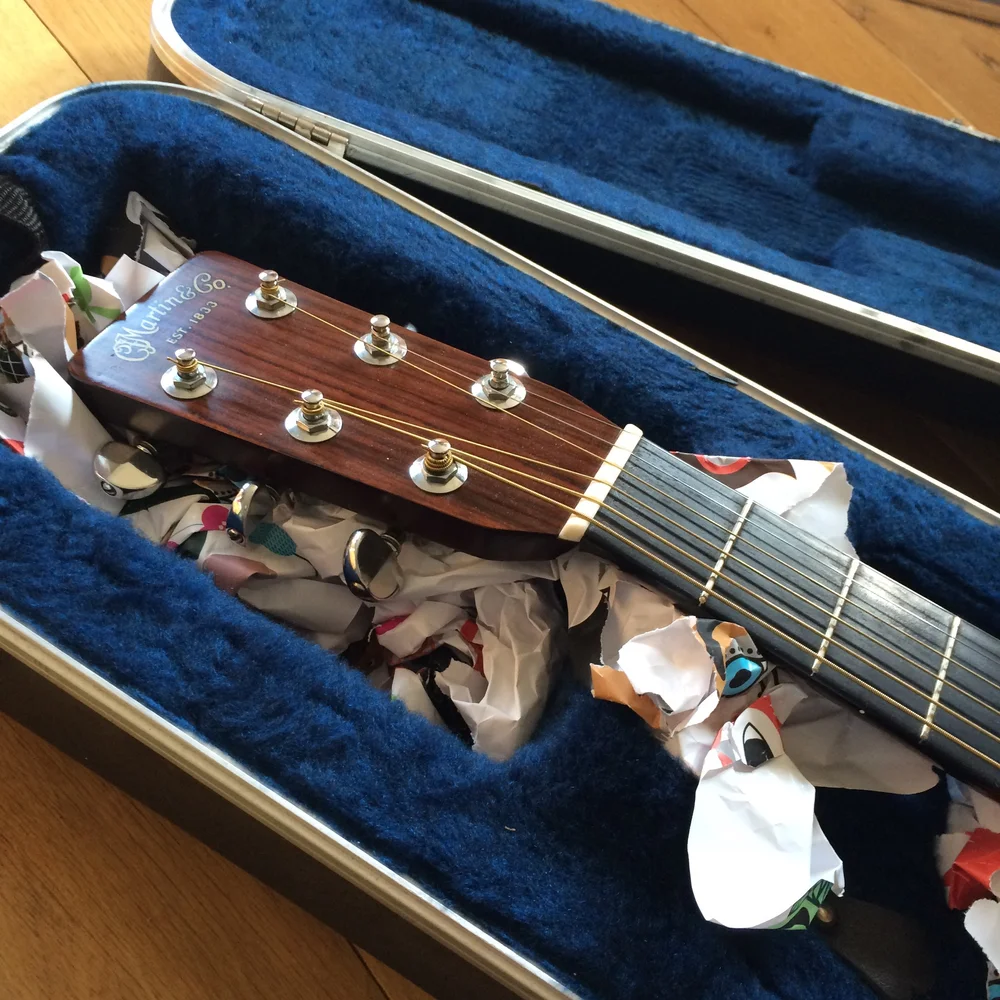
Any empty spaces should be filled with newspaper, bubble wrap, or microfiber towels. Pay particular attention to the headstock, neck heel, and bottom base.
The Shake Test: Close the case and shake it lightly. Then open the case and add padding wherever necessary. It shouldn’t make a sound.
Finish protection: Since the plastic reacts with the wood and damages it, don’t cover your instrument with bubble wrap straight away. Wrap it up in a cloth or paper towel first.
3. The Box-in-Box Approach
Never mail an instrument only in its hard case. You need a strong, corrugated cardboard shipping box meant for instruments (usually found at local music stores or shipping centers).
Fill the outside box’s bottom with three to four inches of packing material; best are packing peanuts or tightly rolled heavy kraft paper. Inside the box, center the locked case to prevent it from touching the edges. Fill the entire surrounding vertical space and the top with additional packing material until the case is totally nestled in a shock-absorbing cocoon. In these instances, you will need to hire specialized white-glove transport services like https://www.shiply.com/us/piano-movers to ensure the item is properly secured, loaded, and climate-controlled throughout the journey.
4. Get ready for changes in the environment
The climate plays a huge role when it comes to the tools. In case you plan on moving under the circumstances of either too hot or too cold climate, you might want to think about using a special humidity package for the tools (Boveda) so that you could maintain the moisture levels.
Do not try opening the box once it arrives at your destination right away. Try keeping the tool in the box for at least one day. This is necessary so that the tool can get accustomed to the new climate.
Pro Tip: Always try to get a straight shipping route. The fewer sorting stations your device passes, the less chance of unintentional drops or extended exposure to unconditioned storage units.
Spending an additional twenty minutes relaxing strings, get rid of internal movement, and adequately double-box your instrument will help you to hand it over to the courier with complete peace of mind.
 Sky Bloom IT
  IQnewswire