
Introduction
Sodiceram is a modern ceramic material made by improving traditional ceramics with special compounds that make it stronger, denser, and more resistant to water and damage. It is designed for use in homes, buildings, and industrial spaces where durability and long life are important.
In simple terms, Sodiceram is a next-generation ceramic that looks beautiful like classic materials but performs better, lasts longer, and requires less maintenance in everyday use.
What Is Sodiceram in Simple Words
Sodiceram is an advanced form of ceramic that has been improved using modern science.
Traditional ceramics have been used for thousands of years in tiles, pottery, and building materials. They are strong, but they can crack, absorb water, or wear out over time.
Sodiceram solves many of these problems by making the material more compact and stable. It is created in a way that reduces tiny holes inside the surface, which makes it stronger and less likely to break.
Because of this, it is now used not only for decoration but also for high-performance purposes in modern construction and design.
The Idea Behind Sodiceram
A New Way to Improve Old Materials
For a long time, people have trusted ceramic materials because they are natural and heat-resistant.
But as buildings became more advanced, there was a need for something stronger and more reliable.
Sodiceram is part of that change. It takes the natural strength of ceramics and improves it using better processing and chemical support.
Why Sodium Matters
The name comes from two parts.
“Sodi” refers to sodium, which helps improve how the material melts and bonds during production.
“Ceram” comes from ceramic, which is the base material.
Together, they describe a ceramic that has been improved at a chemical level to perform better in real life.
How Sodiceram Is Made
Natural Base Materials
The process starts with natural materials like clay, silica, and minerals.
These materials are already known for their strength and heat resistance.
What makes the difference is how they are treated and combined.
The Role of High Heat
The material is heated at very high temperatures in special kilns.
At this stage, everything melts and fuses together more tightly than in standard ceramics.
This creates a strong and dense structure that has fewer weak points.
Careful Cooling and Finishing
After heating, the material is cooled in a controlled way.
This helps keep it stable and prevents cracks.
Modern finishing methods are then used to create different looks, from smooth glossy surfaces to natural stone-like textures.
Key Features That Make Sodiceram Special
Strong and Long-Lasting
One of the biggest advantages is strength.
It can handle heavy use without breaking or wearing out easily.
This makes it ideal for floors, walls, and busy areas.
Low Water Absorption
Water can damage many materials over time.
Sodiceram is designed to resist water because it has very few pores.
This helps prevent stains, mold, and long-term damage.
Heat Resistance
It can handle high temperatures without losing its shape or strength.
This makes it useful in both indoor and outdoor environments.
Easy to Clean
Because the surface is dense and smooth, dirt does not stick easily.
Simple cleaning is enough to keep it looking new.
Flexible Design Options
It can be made in many styles, colors, and textures.
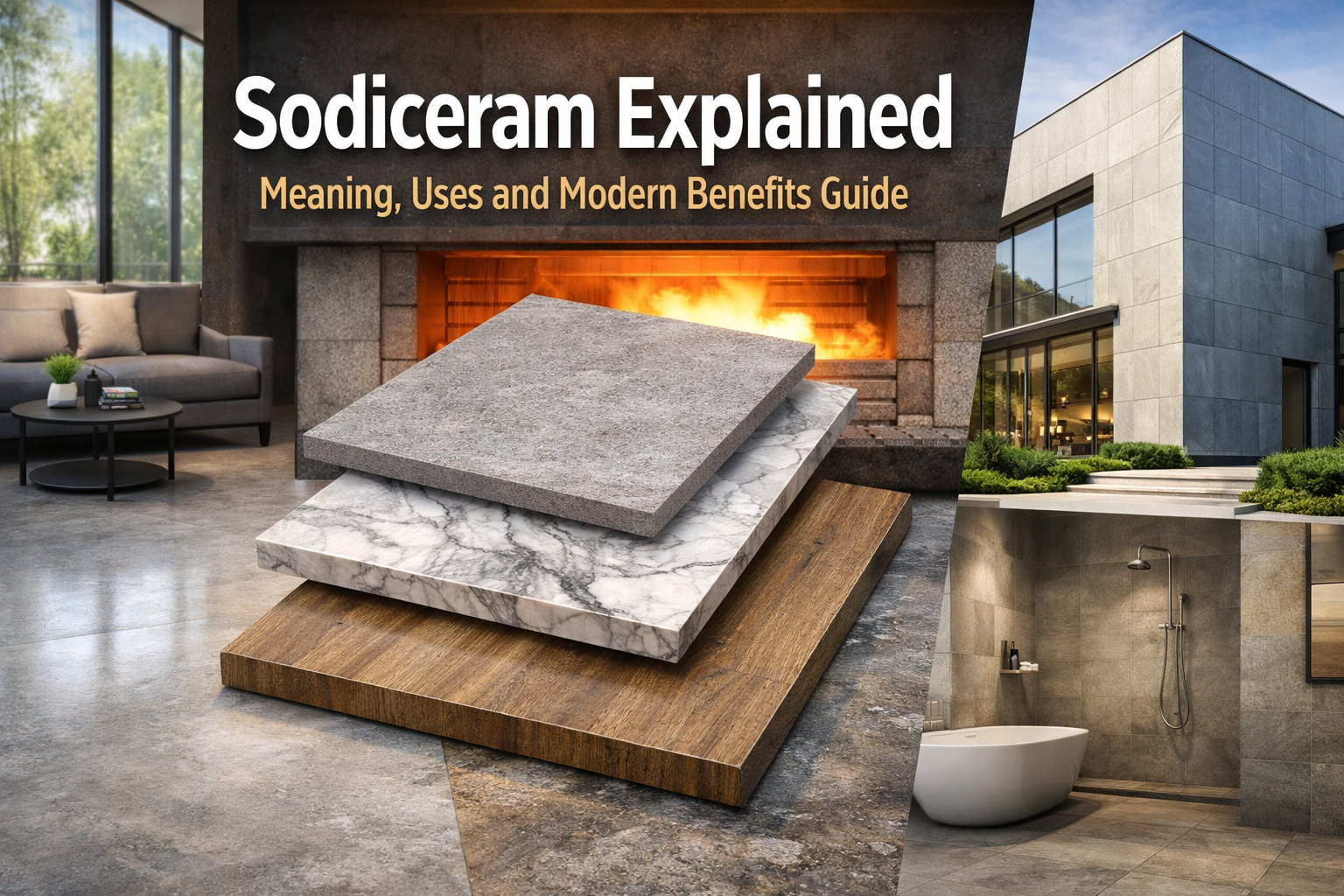
It can look like wood, marble, or natural stone while being more durable.
Types of Sodiceram Surfaces
Smooth and Glossy Finish
This type reflects light and looks clean and bright.
It is often used in living rooms and kitchens where appearance matters.
Matte Finish
Matte surfaces are soft and non-shiny.
They are safer in areas where slipping could be a problem, such as bathrooms.
Textured Finish
Textured surfaces add depth and grip.
They are useful for outdoor spaces or decorative walls.
Where Sodiceram Is Used
Homes
In everyday life, it is used in flooring, kitchen walls, and bathrooms.
People choose it because it lasts long and is easy to maintain.
Offices and Shops
Commercial spaces need materials that can handle constant use.
Sodiceram works well in these places because it stays strong and looks good over time.
Building Design
Architects use it in walls, facades, and modern structures.
It allows creative designs while still being strong and reliable.
Industrial Areas
In some cases, it is used where materials must resist heat and chemicals.
Its durability makes it suitable for demanding environments.
Why People Are Choosing Sodiceram
It Saves Time Over Years
Even though it may cost more at the start, it reduces the need for repairs and replacement.
Over time, this saves both money and effort.
It Fits Modern Lifestyles
Today, people want materials that are easy to manage.
Sodiceram does not require constant care, which makes life simpler.
It Looks Premium
It offers high-end designs without the problems of natural materials like wood or stone.
This balance makes it attractive for modern homes.
Sodiceram Compared to Other Materials
Compared to Traditional Ceramic
Standard ceramics are useful but can break more easily.
Sodiceram improves strength and reduces weaknesses.
Compared to Natural Stone
Stone looks beautiful but can be heavy and absorb water.
Sodiceram offers a similar look with better performance.
Compared to Wood
Wood feels warm but needs regular care.
Sodiceram can copy the look of wood while being stronger and more resistant.
Things to Consider Before Choosing
Cost
It may be more expensive than basic materials.
But its long life often makes it worth the investment.
Quality Differences
Not all products are the same.
It is important to choose a trusted manufacturer.
Proper Installation
Even the best material needs proper installation.
Good work ensures it performs well for many years.
How to Choose the Right Option
Think About Where It Will Be Used
Different areas need different types.
For example, outdoor spaces may need more grip and strength.
Look at the Finish
Choose a finish that matches your style and needs.
Glossy for beauty, matte for safety, textured for grip.
Check Basic Performance
Make sure it meets the requirements for strength and water resistance.
This helps avoid problems later.
Maintenance and Care
Keeping Sodiceram in good condition is simple.
Regular cleaning with water and mild cleaners is usually enough.
Because it resists stains and moisture, it stays in good shape for a long time.
With proper care, it can last many years without losing its quality.
The Future of Sodiceram
Materials are always improving as technology grows.
Sodiceram is part of this progress.
In the future, we can expect even better versions with improved strength, design, and environmental benefits.
It is becoming a preferred choice for people who want materials that are both practical and beautiful.
Conclusion
Sodiceram is a modern solution built on a traditional idea.
It takes the strength of ceramics and improves it to meet today’s needs.
It offers durability, beauty, and ease of use in one material.
For homes, businesses, and advanced spaces, it provides a reliable and long-lasting option.
Choosing Sodiceram is not just about style.
It is about choosing a material that supports a better, simpler, and more durable way of living.