
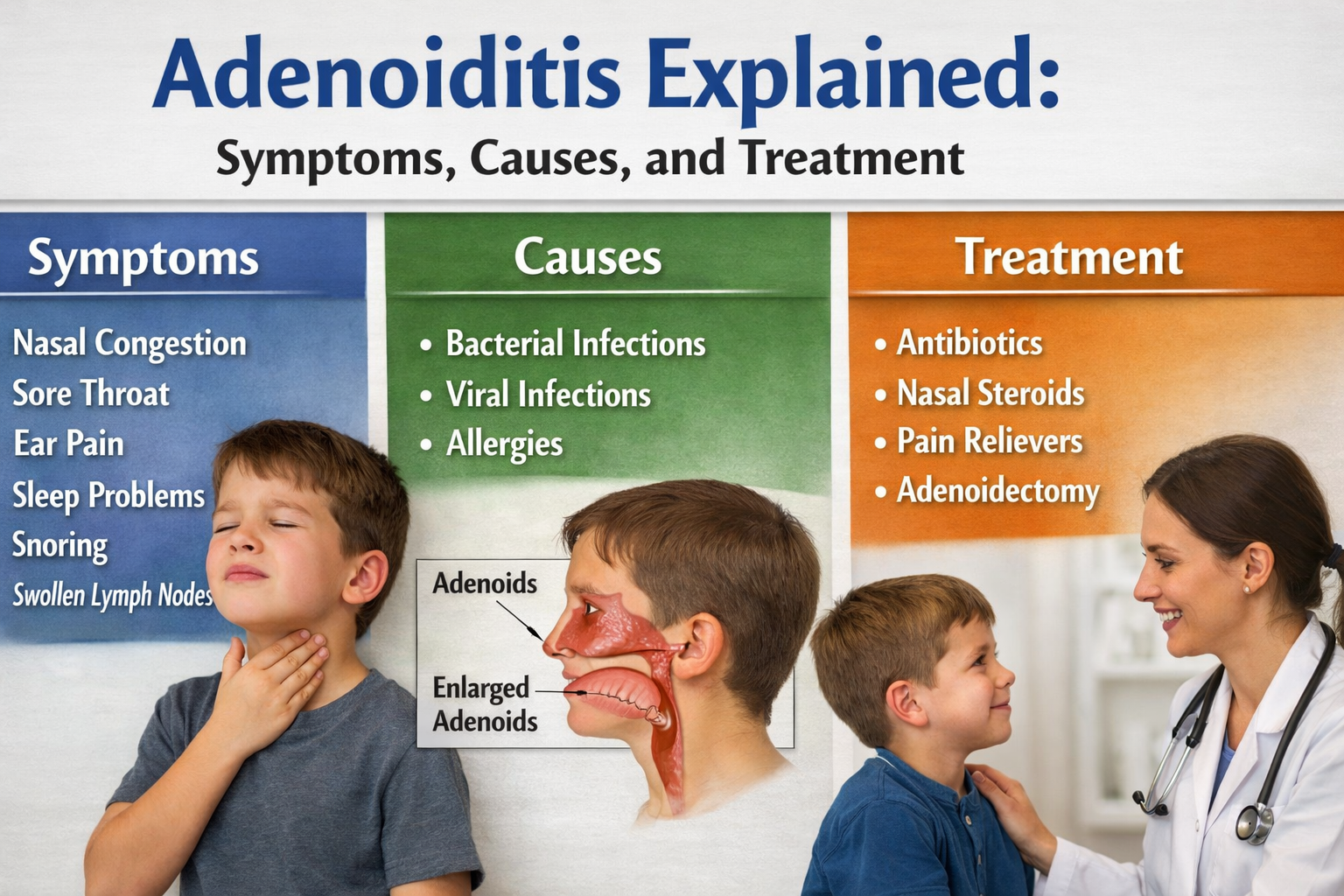
What is adenoidid?
Adenoidid is a common term used to describe problems with the adenoids, especially when they become swollen or infected.
Adenoids are small tissues located behind the nose that help the body fight germs. When they become enlarged or inflamed, they can block airflow and cause symptoms like a stuffy nose, mouth breathing, snoring, and frequent infections.
This condition mainly affects children and is usually manageable with simple care, medical treatment, or in some cases, minor surgery.
Understanding Adenoids in Simple Words
Adenoids are soft, small tissues found at the back of the nasal passage. You cannot see them by just opening your mouth.
They are part of the immune system, especially active in early childhood.
Why are adenoids important?
They help the body by:
- Catching germs that enter through the nose
- Supporting the body’s defense system
- Helping children build early immunity
As children grow older, their immune system becomes stronger, and the adenoids slowly shrink.
What Does Adenoidid Include?
The term “adenoidid” is not a strict medical word, but people often use it to describe two main conditions.
Adenoiditis
This happens when the adenoids become infected and inflamed. It is usually caused by viruses or bacteria.
Enlarged Adenoids
This means the adenoids become bigger than normal. This often happens after repeated infections.
Both conditions can make breathing difficult and affect daily comfort.
Common Symptoms You May Notice
Adenoid problems usually affect breathing, sleep, and the throat.
Most common signs include:
- Stuffy or blocked nose
- Breathing through the mouth
- Snoring during sleep
- Runny nose or mucus in the throat
- Sore throat
- Bad breath
- Fever in some cases
- Trouble sleeping
Children may also feel tired during the day because they do not sleep well at night.
What Causes Adenoid Problems?
Adenoids become swollen when the body is fighting something.
Common causes include:
- Viral infections like cold or flu
- Bacterial infections
- Allergies
- Repeated throat or chest infections
- Irritation from acid reflux
Sometimes, even after the infection goes away, the swelling stays for some time.
Who is Most at Risk?
Adenoid problems mostly affect young children.
Higher risk group:
- Children between 2 and 7 years
- Kids who get frequent colds
- Children exposed to smoke or dust
- Children with untreated allergies
Adults rarely have this problem because adenoids shrink with age.
How Adenoidid Affects Daily Life
At first, symptoms may seem small. But over time, they can affect normal life.
Possible effects:
- Difficulty breathing through the nose
- Poor sleep quality
- Daytime tiredness
- Difficulty focusing in school
- Frequent ear infections
- Temporary hearing problems
If not treated, these issues can slowly affect a child’s growth and comfort.
How Doctors Diagnose the Condition
Doctors use simple and safe methods to find the problem.
Diagnosis usually includes:
- Asking about symptoms
- Checking the nose and throat
- Using special tools to see the adenoids
- Sometimes using imaging tests
- Checking for allergies if needed
Since adenoids are hidden, doctors need tools to examine them properly.
Treatment Options Explained Simply
Treatment depends on how serious the condition is.
1. Home Care
Mild cases often improve on their own.
Helpful steps:
- Rest and good sleep
- Drinking warm fluids
- Using saline nasal drops
2. Medicines
Doctors may give:
- Antibiotics for bacterial infections
- Allergy medicines
- Nasal sprays to reduce swelling
These treatments usually help reduce symptoms quickly.
3. Surgery (Adenoid Removal)
If the problem keeps coming back or becomes severe:
- Doctors may remove the adenoids
- The procedure is simple and safe
- Children recover quickly and live normally without them
Surgery is usually the last option when other treatments do not work.
Simple Ways to Prevent Adenoid Problems
You cannot prevent every case, but healthy habits help a lot.
Easy prevention tips:
- Encourage regular hand washing
- Avoid smoke and pollution
- Provide a healthy diet
- Treat allergies early
- Do not ignore infections
These steps support overall health and reduce risk.
When Should You See a Doctor?
It is important to seek medical help if:
- Mouth breathing becomes constant
- Snoring is loud or happens daily
- Sleep is disturbed often
- Infections keep returning
- Symptoms last more than one week
Early treatment helps avoid bigger problems later.
Conclusion
Adenoidid may sound like a complex word, but it simply refers to problems with the adenoids becoming swollen or infected.
For most children, this is a temporary condition that improves as the body grows and becomes stronger. With proper care, symptoms can be managed easily.
The key is awareness. When you notice early signs and take action, you can prevent discomfort and support healthy breathing and sleep.
In a deeper sense, this condition reminds us how important simple things like breathing, sleep, and immunity are for overall well-being. Taking care of these basics creates a healthier and more balanced life.
 nikecarkarel@gmail.com
  Sky Bloom IT
  IQnewswire